Sweetly Unhinged (Devoted in Darkness, Book 1), by Kira Cole | Free Audiobook
5 May 2026
This Kingdom Will Not Kill Me (Maggie the Undying, Book 1), by Ilona Andrews | Free Audiobook
5 May 2026Audiobook details
She cracked the codes that changed the war
In 1916, Elizebeth Smith was a young woman with a Shakespeare degree and no particular plan when a wealthy eccentric named George Fabyan hired her to find hidden messages in the First Folio at his private research estate outside Chicago. The job was strange. The work turned out to be the beginning of a career that would define American cryptography for the next four decades. At Riverbank she also met William Friedman, the man she would marry, and together they became the foremost code-breaking pair in the country's history.
After the war, Elizebeth went to work for the government, dismantling the encrypted communications of rum runners and gangsters during Prohibition, then accepting a covert mission that took her deep into Nazi intelligence operations across South America. While William worked on breaking the Purple cipher used by Japan, Elizebeth spent years inside a classified operation so sensitive that the FBI, under J. Edgar Hoover, would later take credit for her work and bury her name for decades.
Jason Fagone spent years working from diaries, letters, and documents long held under lock to reconstruct a life that had been systematically erased. The Woman Who Smashed Codes is the result: a biography that reads like a thriller, built on primary sources, and long overdue.

I knew nothing about Elizebeth Smith Friedman before this book. That is exactly the problem Fagone is writing against, and he makes the case for her significance without ever needing to editorialize. The facts are sufficient.
What makes the book extraordinary is the sourcing. Fagone worked from Elizebeth's personal papers, diaries, and letters, many of which had been classified or quietly set aside for decades. The result is a biography with genuine texture: you understand not just what she did but how she thought about it, what it cost her, and how she navigated a professional world that was structurally committed to not crediting her. The J. Edgar Hoover sequence, in which the FBI systematically absorbed her wartime intelligence work and erased her name from the record, is one of the most quietly enraging passages in recent American non-fiction.
The marriage to William is handled with care. Fagone does not flatten it into a simple partnership or a competition. It was both, at different times, and the personal pressures that the secrecy of their respective work placed on their relationship are documented with specificity. William's mental health deterioration in the later years is not elided. The book earns its emotional weight by treating the personal as seriously as the professional.
The Prohibition section surprised me most. I had expected the WWII cryptography to be the center of gravity, and it is impressive, but the rum-running cases are where Fagone's scene-building is at its sharpest. Courtroom testimony, chase sequences, intercepted messages decoded in real time: this is narrative non-fiction working at the level of the best historical fiction.
Cassandra Campbell narrates the full 13 hours and 37 minutes and she is ideally suited to the material. Her pace is precise and her handling of the technical cryptography sequences is clear without being condescending. She gives Elizebeth a voice that is intelligent and contained, which is accurate to the woman Fagone reconstructs. This is a book that rewards long listening sessions and Campbell's steady authority makes that easy to sustain.
Some links on this page are affiliate links. As an Amazon Associate, I earn from qualifying purchases at no extra cost to you.
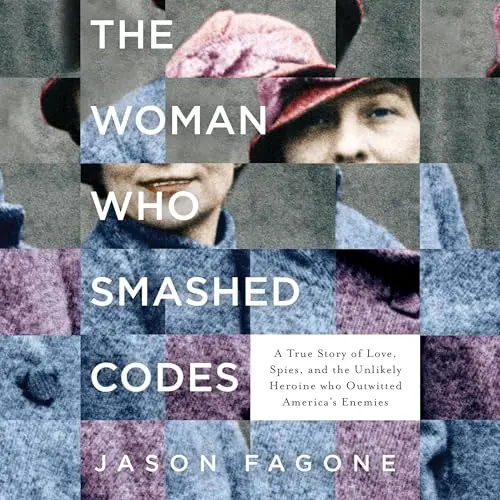
The Woman Who Smashed Codes by Jason Fagone reconstructs the life of Elizebeth Smith Friedman, who began her career hunting for hidden messages in Shakespeare's folios and went on to break the codes of bootleggers, gangsters, and Nazi spy networks operating across South America during World War II. Built from decades of primary source research including personal diaries and classified documents, the book restores a woman whose contributions to American intelligence were deliberately buried by the FBI under J. Edgar Hoover.
The free trial, cancellable at any time, gives you immediate access. Cassandra Campbell narrates across 13 hours and 37 minutes, bringing the precise intelligence and quiet authority the subject demands. Her handling of the technical material is clear without ever becoming dry, and her sustained performance across the full runtime makes this one of the strongest history audiobooks in the format.
The audiobook is yours to keep even after the trial ends. The free trial also opens access to thousands of other titles with no commitment required. Start listening now.



More Biographies & Memoirs Audiobooks



US-based editor & staff writer focused on audiobooks. Honest reviews, curated “best of” lists, and practical guides with an accessibility lens.