Scary Stories to Tell in the Dark, by Alvin Schwartz | Free Audiobook
The versions of the ghost story that actually get told out loud
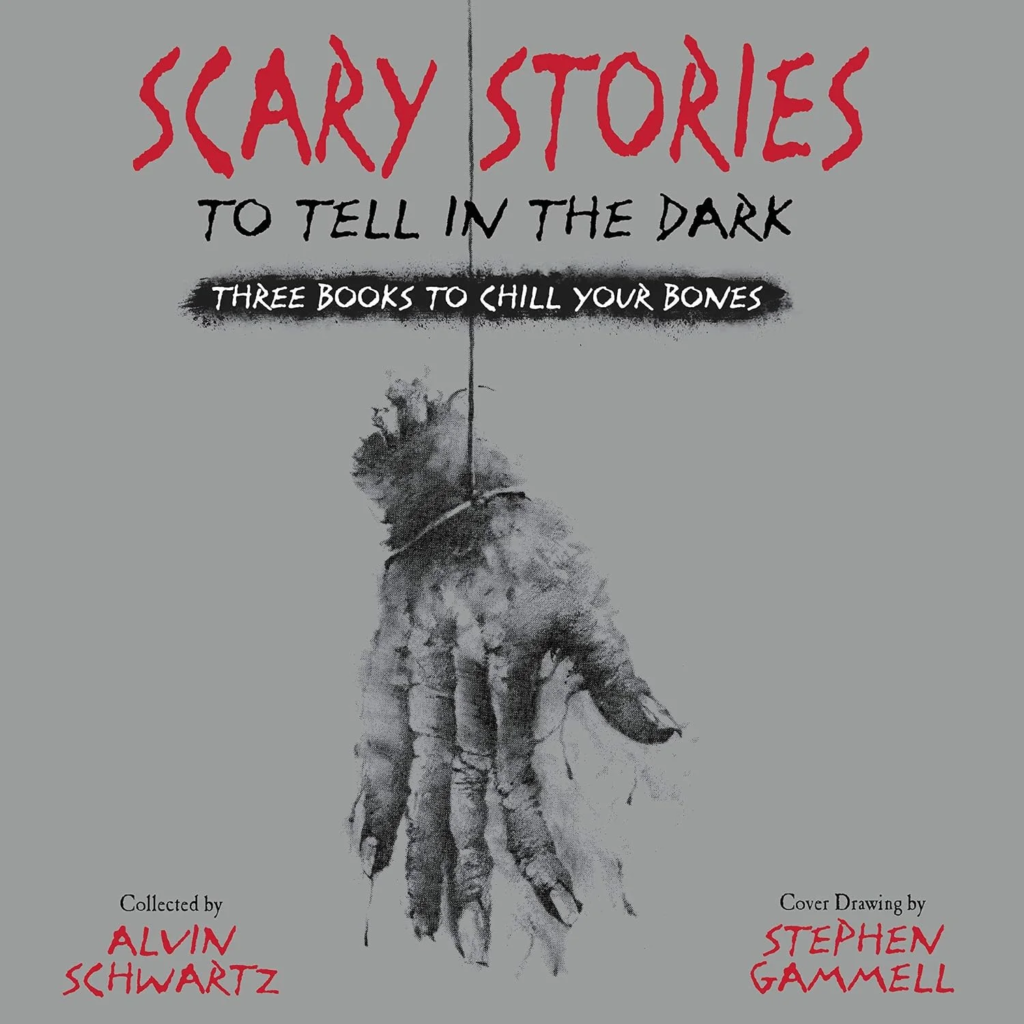
Three collections in one, and a folklorist's ear for the version of a story that has genuinely survived being passed around. Alvin Schwartz spent years gathering these from old printed collections, songbooks and oral retellings, then rewrote them for someone who wants to be frightened in the space of a few minutes, and this anthology assembles all three of the books that did it: the original, More Scary Stories, and Scary Stories 3.
What survives the move to audio, and survives it better than expected, is the shape of the things. They are short, they end badly, and they were built to be read aloud by somebody who would then have to walk home in the dark. Corpses that refuse to stay where they were put, a scarecrow with opinions, a toe in a stew, a girl with a ribbon that must never be untied: this is folk horror in its most portable form, and Schwartz's retellings are the ones that stuck.
Three narrators split the work across four hours and thirteen minutes, and the collection arrives complete. The illustrations everybody remembers are obviously absent, which turns out to matter less than you would think, because the point of these stories was always the voice doing the telling.

I came to this as an adult with a long-standing grudge against a scarecrow, and left it impressed by how well these things work without a picture. Patton Oswalt, Melissa McBride and Alex Brightman trade stories across four hours, and the whole thing has the rhythm of a night around a fire with three unusually good tellers. It is also, and this is the key thing for anyone over twelve, genuinely unsettling rather than nostalgic.
What Schwartz understood is that a short horror story is a performance, not a text, and the collection is edited accordingly: setups run a paragraph, the scare lands on the last line, and almost nothing is explained. That structure is ideal for audio, where a listener cannot skim, and it means the anthology works beautifully in fragments. I listened to it in twenty-minute portions over a week, which felt exactly right, and the variety of voices keeps the register from flattening out across three books.
The narration is the reason to choose this edition. Oswalt is the most obviously at home with the material, and he knows precisely where to put the pause before a punchline that happens to be a death. McBride brings a steadier, colder delivery to the more mean-spirited pieces, and Brightman handles the ones that shade into comedy. Between them they cover the tonal range the three collections actually contain, which is wider than the reputation suggests: some of these are jokes with a body in them, and some are not jokes at all.
My real complaint is about the packaging of the audio edition rather than the stories, and it is the one thing that would make me hesitate to recommend it over the physical book. This production carries a great deal of front matter, back matter, credits and footnotes, and because the stories are two or three minutes long, the apparatus starts to feel like it takes up a disproportionate share of the running time. Another listener put it better than I can, saying it was a bit much to listen to all the credits and footnotes, and that this is probably better as a book you hold. I would not go that far, since the narration is the whole point, but the scholarly scaffolding does interrupt the spell more often than it should.
There is also a shape to the collection that is worth warning about. The first book is the thinnest of the three, and several listeners report needing to push through it before the material picks up, with one saying the stories improve as you continue and that they preferred the second half. That matched my experience: the strongest pieces cluster in the middle and back, and if you sample the first twenty minutes and find it slight, the correct response is to keep going rather than to conclude anything.
On suitability, since this is a collection with a children's reputation and an adult fan base: the images that made these books famous in the playground are not here, which makes the audio version considerably gentler than the print, but the content still includes murdered children, dismemberment played for laughs and a number of corpses who behave badly. Younger listeners handle these better than their parents expect, and I would still not start them on the cannibal one.
For listeners who want short, sharp, traditional horror, for anyone driving at night who wants something they can stop at any point, and for households where a long journey needs four hours of reliably good telling. If you want a full-length seasonal novel instead, the site's A Night in the Lonesome October shares the October mood and runs longer, and this sits happily in a set of chilling audiobooks for Halloween nights.
Scary Stories to Tell in the Dark is the complete audio collection of all three of Alvin Schwartz's anthologies: the original 1981 book, More Scary Stories to Tell in the Dark and Scary Stories 3. This edition runs 4 hrs and 13 mins and is performed by Patton Oswalt, Melissa McBride and Alex Brightman, released on December 22, 2020.
Schwartz was a folklorist, and the stories are drawn from older collections, songbooks and oral tradition rather than invented from scratch, which is why so many of them feel familiar. Each one is short enough to finish in a few minutes, and almost all of them end abruptly and badly, in the manner of the stories people actually tell around a fire rather than the ones publishers write.
Wherever you listen, a free trial behaves the same way: you take the month, you spend it on whichever single title you want, and whatever you choose stays in your library even if you cancel before the month ends. Four hours is short for a month, so this one suits a listener who wants something to dip into between longer books, or a family that needs a long drive covered.
Start your free trial, cancellable at any time
Some links on this page are affiliate links. As an Amazon Associate, I earn from qualifying purchases at no extra cost to you.

US-based editor & staff writer focused on audiobooks. Honest reviews, curated “best of” lists, and practical guides with an accessibility lens.
More Horror Audiobooks