The Law of the Sublime, by Robert Greene | Free Audiobook

The Law of the SublimeAudiobook
Greene goes looking for something bigger than strategy
Robert Greene spent four books teaching people how to read power, and this one starts from a different problem: that winning the game does not answer the question of what any of it was for. The argument here is that the thing people are missing has a name, and that it is available in nature, in other minds, and in experiences that make the self feel smaller rather than larger.
Twenty-seven hours is a serious commitment, and the structure is built for it, moving between case material and instruction in the way his earlier titles did. The subject is the Sublime in the older sense of the word: the encounter that takes a person out of their own head, and the claim that seeking it deliberately is a discipline rather than a luxury.

There is a real tension at the centre of this book and Greene does not resolve it neatly: the author of the most cynical manual on power in modern publishing has written a case for transcendence, and he seems to mean it.
The strongest sections are the ones about attention. His argument is that a life spent entirely on the virtual and the measurable produces a specific kind of flatness, and that the antidote is not rest but scale, the experience of something vast enough to recalibrate what you thought mattered. Whatever you make of the framing, the diagnosis lands.
Hearing him read it is a genuine advantage. The prose in his earlier titles can sound like a lecture when spoken, and here the delivery is slower and more personal, closer to someone thinking out loud than to an instructor making points. Across twenty-seven hours that difference is the whole experience.
One practical note: twenty-seven hours and thirteen minutes, read by the author, and a standalone book rather than part of a series. That length is the main thing to weigh before starting, and the trial is the sensible way to test it.
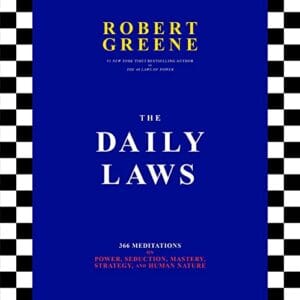
If you know the earlier work, The Daily Laws is the distilled version of everything that came before, and Mastery is the closest in ambition to this one. This is the most inward of the three, and the least strategic.
It is also, unexpectedly, a book about attention as a moral matter: what you choose to look at, and how much of your life is spent looking at things designed to be looked at rather than things worth seeing. That thread is worth the whole runtime on its own.
Greene is also more willing to admit uncertainty here than in his earlier books, and the book is better for the humbler register.
The Law of the Sublime is Robert Greene arguing that the thing missing from a life spent on the measurable is scale, and that the Sublime can be pursued on purpose. Twenty-seven hours and thirteen minutes, read by the author.
The free trial is the sensible way to test a book this long: you open it, you take this title, and you decide afterwards whether you want the subscription at all. If you do not, the audiobook stays in your library anyway, so twenty-seven hours can wait for the right month. Twenty-seven hours is a month of listening for most people, so pace it rather than binge it.
For more on the cancellation process, a dedicated guide is available. And if you decide not to keep the subscription, the audiobook remains yours. Before that, give a long argument the time it is asking for. Give it a month of walks rather than a weekend, and the argument has room to settle.
Start your free trial, cancellable at any time
Some links on this page are affiliate links. As an Amazon Associate, I earn from qualifying purchases at no extra cost to you.

US-based editor & staff writer focused on audiobooks. Honest reviews, curated “best of” lists, and practical guides with an accessibility lens.