
Vows of Blood and Deception (The Hirathean Path, Book 2), by Aria Ashbrook | Free Audiobook
27 July 2026
Mercy, by Dylan Page | Free Audiobook
28 July 2026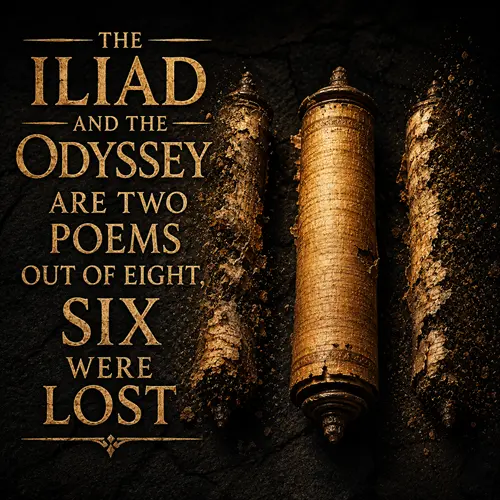
The Epic Cycle
The Iliad and the Odyssey are two poems out of eight. Six were lost.
Homer wrote two of them. The other six are gone.
The Trojan War was told across eight epic poems. The wooden horse, the fall of the city and the death of Achilles are not in the two we still have.
Eight poems · Two survived
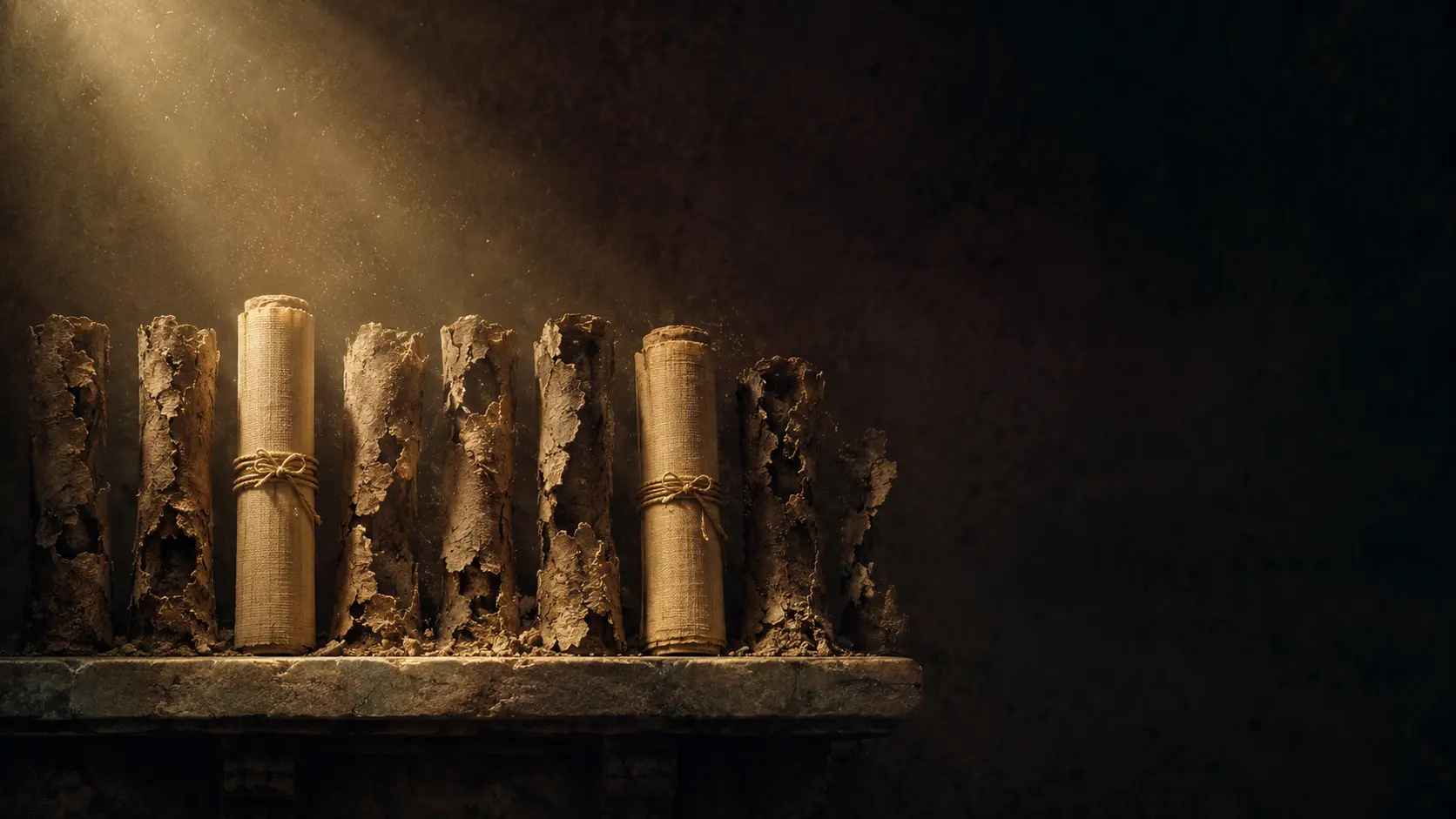
The Iliad and the Odyssey are not standalone works. They are two entries in a set of eight epic poems that once covered the entire Trojan War, from the wedding that started the quarrel all the way to Odysseus lying dead on a beach, killed by a son he had never met. Six of those eight no longer exist. They also happen to be the six that contain the scenes everybody knows.
Scholars call the set the Epic Cycle. Homer’s two poems sit inside it at positions two and seven. The other six were copied for centuries, then stopped being copied, and disappeared. What is left of them is a summary written by a man called Proclus, plus a few hundred quoted lines scattered through other authors.
So the wooden horse, probably the most recognizable image in Western storytelling, reaches us through a plot synopsis.
The full run, in order
Titles below are the conventional ones. The attributions are shaky, which is normal for this material.
Everything that causes the war. The golden apple, the judgement of Paris, Helen leaving with him, the Greeks gathering, Iphigenia at Aulis, and nine years of raiding before the Iliad even opens.
Roughly seven weeks in year ten. Achilles falls out with Agamemnon, refuses to fight, loses Patroclus, kills Hector, then gives the body back. The war is still going when the poem ends.
Penthesilea the Amazon queen, Memnon of Ethiopia, and the death of Achilles, shot by Paris with Apollo’s help. Ajax and Odysseus then fight over who inherits his armor.
Ajax loses the armor and kills himself. Philoctetes and his bow are fetched back from exile. Epeius builds the wooden horse and the Greeks climb inside.
The horse comes through the gates. Laocoon and the serpents, Cassandra dragged from the temple, Priam killed at the altar, the city burned. The fall of Troy took two books, and neither survives.
The other homecomings. Menelaus blown off course, Agamemnon murdered in his own bath the night he gets back. This is the material Aeschylus later turned into tragedy.
Ten more years at sea. The Cyclops, Circe, the underworld, Calypso, and finally the slaughter of the suitors in his own hall.
Odysseus dies. Telegonus, his son by Circe, lands on Ithaca, raids it without knowing whose island it is, and kills his father in the fight. The ending gets stranger from there.
Seven claims about the Epic Cycle, checked
True: the Trojan story ran to eight poems
The count and the order hold up. The Iliad is the second station of the sequence and the Odyssey the seventh, with the Telegony closing it out. One thing worth adding: ancient sources also grouped a Theban set and a poem about the war of the gods under the same “Cycle” label. The eight above are specifically the Trojan run.
False: Hector and Patroclus die in the lost poems
This is the mistake that comes up most often. Patroclus is killed in Book 16 of the Iliad, Hector in Book 22, and Hector’s funeral is the last scene of the poem. Both deaths are in the text you can still read. Only Achilles’ own death falls outside it, in the Aethiopis.
Half right: the wooden horse never appears in Homer
The horse and the sack are narrated in the lost poems, yes. But the Odyssey refers to both. A bard sings about the horse in Book 8 while Odysseus quietly weeps, and Helen and Menelaus swap stories about it in Book 4. Homer assumes you already know, which tells you the wider story was circulating long before anyone wrote it down.
Half right: the story of Achilles’ heel is in one of the lost poems
Achilles is killed by an arrow in the Aethiopis. But the surviving summary says nothing about a heel, and nothing about him being invulnerable everywhere else. The dip in the Styx and the one unprotected ankle show up in much later Roman-era retellings, centuries after the poem that kills him.
Half right: the other six were written to fill Homer’s gaps
The comparison people usually reach for is Star Wars, where the first film released was not the first in the timeline. As written texts the cyclic poems do look later than Homer, and several of them read like deliberate gap-filling. But they draw on the same oral tradition, and some of the stories inside them are probably as old as anything in the Iliad. Being written down later does not mean the story itself is younger.
False: this is the oldest story ever told
The Epic of Gilgamesh was already old by the time these poems were composed, with versions circulating in Mesopotamia roughly a thousand years earlier. Homer is early, but not first.
True: Odysseus is killed by his own son, and it gets worse
Not Telemachus. Telegonus, his son by Circe, kills him without either of them knowing who the other is. He then takes the body, along with Penelope and Telemachus, back to Circe’s island, where Circe makes all three of them immortal. Telegonus marries Penelope, his father’s widow, and Telemachus marries Circe, his father’s former lover and his half-brother’s mother. Two households fully merged, and as far as we can tell the poem played it completely straight.
How do you lose six epic poems?
There was no fire and no edict. They just stopped being worth the labor of copying.
Every copy was made by hand, and every copy cost somebody weeks of work. Around the second to fourth centuries AD, texts were also migrating from papyrus rolls to bound codices, and anything not chosen for that jump quietly aged out. The selection favored whatever was being taught. Boys learned to read on the Iliad, teachers wrote commentaries on it, and the manuscript tradition kept feeding itself.
The cyclic poems had nothing like that behind them. Aristotle had already used them as a negative example in the Poetics, his point being that Homer built around a single action while the others just marched through events in order. That verdict stuck. If you had one scribe and one budget, you copied the masterpiece and not the supplement.
The Trojan Horse survives as a plot summary of a poem nobody has read in fifteen hundred years.
What did survive is a work called the Chrestomathy, by Proclus, which walks through each poem in a few paragraphs. It reaches us secondhand, partly through the ninth-century scholar Photius and partly bound into a Homeric manuscript in Venice. Add a scattering of direct quotations in other authors and you have the whole surviving record. That is enough to know the shape of each poem, but not one continuous scene made it through.
Start where the text still exists
Both of Homer’s poems are public domain, and there are excellent free recordings of the classic verse translations.
The two that survived
Poem II · Survives
The IliadSeven weeks of year ten: a quarrel over honor, a friend killed in borrowed armor, and a father asking for his son’s body back.
Listen free →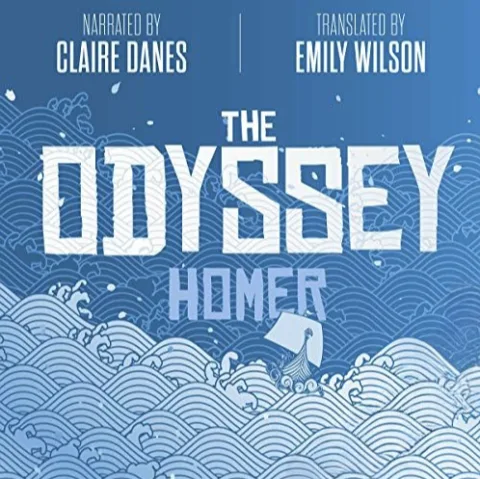
Poem VII · Survives
The OdysseyTen years of getting home, and a homecoming that turns out to be the most violent thing in the book.
Listen free →2026 turned out to be Homer’s year
Christopher Nolan released The Odyssey on 17 July through Universal. It cost around $250 million, making it the most expensive film of his career, and it is the first feature shot entirely on IMAX 70mm cameras. Matt Damon plays Odysseus, with Anne Hathaway as Penelope, Tom Holland as Telemachus, Zendaya as Athena, Charlize Theron as Circe and Robert Pattinson as the chief suitor Antinous.
An R-rated, three-hour poem adaptation with no franchise behind it was not supposed to do that. Premium large formats carried a majority of the domestic gross, and the film took an A CinemaScore, which is why the second weekend held instead of collapsing.
Note what Nolan is adapting, though. The Odyssey is poem seven. The war itself, the horse and the burning city all sit in the lost material, so any film has to reconstruct them the way everyone since antiquity has done: from summaries, vase paintings, and Virgil’s Roman retelling four centuries later.
And then Elon Musk announced a competing version
On 22 July, five days after the film opened, Musk posted that xAI’s Grok Imagine would produce a full-length Odyssey before the end of the year, in a version he described as historically accurate and true to Homer. He was quote-posting a three-minute clip by the studio Heavy Pulp showing Odysseus and Calypso, generated entirely with the tool. He had publicly criticized Nolan’s casting choices earlier in the year, and most reporting has read the announcement in that light.
The technical gap is the interesting part. Grok Imagine’s current video model outputs clips of roughly six to thirty seconds at up to 720p. A feature is not a stack of clips. It needs the same face across hundreds of shots, consistent light, and a story that holds together for two hours, and no generative system has publicly demonstrated that in 2026, xAI’s or anyone else’s. Musk has form here too. In October 2025 he predicted a watchable AI-made film by the end of 2026 and genuinely good ones in 2027, so the timeline has already moved once.
Whether it ships or not, the framing is strange. The complaint is about fidelity to a text, and that text happens to be the one part of this story that was never at risk. The six poems nobody is filming are the ones that actually got lost.
Every generation has filled it. Virgil wrote the sack of Troy from the losing side. Sophocles and Euripides mined the Nostoi for tragedy. Dante put Odysseus in hell for one last voyage. Joyce moved the whole thing to Dublin and squeezed it into a single day. The story kept moving because there was room left in it.
Two modern novels that walk straight into the gap
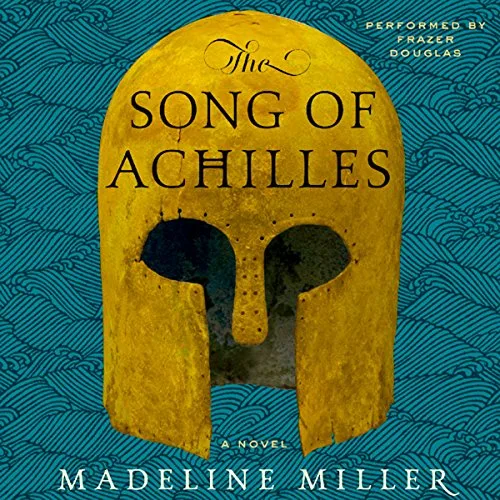
Madeline Miller is not part of the Cycle. Her books are novels, from 2011 and 2018. But they are the closest thing we have to reading poems three and eight, because that is exactly the ground they cover. The Song of Achilles runs from Achilles’ boyhood to his death, taking the story past the point where the Iliad stops. Circe spends its final act on Telegonus and the death of Odysseus at his son’s hand, which is the Telegony written out in full about 2,700 years late.
Filling in the lost poems
Covers the Aethiopis ground
The Song of AchillesPatroclus tells it. Ends where the lost third poem ends, with the arrow and what follows.
Listen free →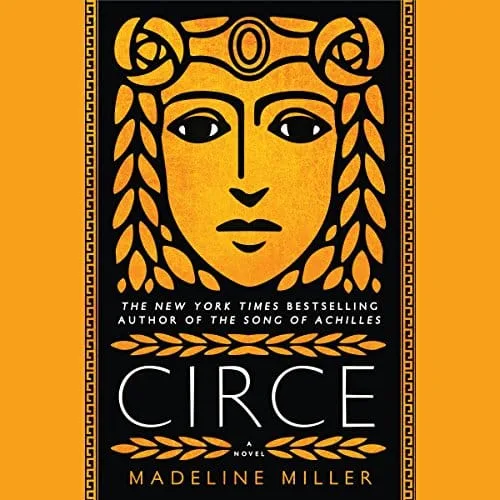
Covers the Telegony ground
CirceThe witch who turned his crew into pigs gets the whole story, including the son she raised and what he did with a spear.
Listen free →The last scene nobody filmed
Odysseus survives the Cyclops, the Sirens, the underworld and a hall full of armed men. Then a young stranger comes ashore looking for food, they fight over cattle, and the stranger kills him with a spear. Neither of them knows who the other is until it is over. The son finds out he has killed his father, and the father finds out he had another son.
Ancient readers had two books of that. We have a paragraph.
More Blog Audiobooks






US-based editor & staff writer focused on audiobooks. Honest reviews, curated “best of” lists, and practical guides with an accessibility lens.


